What is Customized Integration? What is Linguistic Review and what role does it play in translation? In the ever-evolving landscape of science and technology, translation involves not only working with physical documents but also with various file formats and complex digital platforms. If you’re planning to build a multi-lingual foundation for software, a website, or an application, don’t skip through the article below about Customized Integration and Linguistic Review services, their benefits, and implementation processes.
Customized Integration refers to the process of incorporating a new feature or function into a software system, which can be flexibly customized to meet all requirements. Customized Integration in translation refers to the process of integrating one or more new languages into a software system while ensuring the compatibility of translations with the interface and other functions.
With its superior flexibility and comprehensive quality control, Customized Integration is generally a preferred choice for many businesses and software developers. Specifically, some projects that may benefit Customized Integration include:
Learn more about Thao & Co.’s App + Software + Website + Game Translation Services!
These are tech products with complex structures and user-friendly interfaces. Customized Integration ensures smooth functionality while preserving the aesthetic nature of the interface. After the Customized Integration process is completed, Linguistic Review will step in to maintain cultural nuances and the seamlessness of the target language.
Linguistic Review refers to the process where linguists test and proofread the appropriateness of the translation after integrating it into the system. This is a crucial part of Localization Testing to ensure that the software product is friendly for new users and brings maximum efficiency.
In simple terms, Customized Integration handles the technical aspects, while Linguistic Review tackles the language aspect. These two services mutually support each other, enabling businesses to achieve well-structured and comprehensive multi-lingual software products.
Automated Integration is an increasing development trend due to its time and cost-effective advantages. It involves using available translation APIs to integrate translation into the software system to automate the translation process.
Customized Integration and Automated Integration differ in how the added feature(s) operates. For Automated Integration, content is translated and automatically integrated through APIs provided by a third party. While this process saves time and human resources, it faces some limitations in terms of system compatibility, flexibility, quality, appropriateness of the translation with UI elements, and potential security risks.
In Customized Integration, on the other hand, programmers will directly update the translated and localized content into your content management system (CMS). This manual integration process may take more time but can offer full control, UI/UX risk reduction, high security, and other long-term benefits.
Customized Integration in translation can bring numerous benefits when businesses need to expand into new markets with their software products. Let’s explore the advantages of Customized Integration.
Even though translations are meticulously done, integrating them into a website or software may sometimes lead to a lack of naturalness and context-appropriateness. When an expert translation agency assists in language integration, the company can ensure seamless and contextually appropriate translations that align with relevant functions.
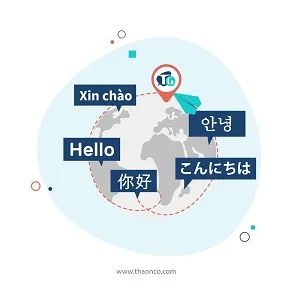
For example, in the translation project for our website Thaonco.com, the title for our introductory message is “Meet Thao & Company.” Upon integrating the Korean language into the website, the content was adjusted to “Thao & Company 소개,” which simply means “Introduction to Thao & Company” in Korean. This version sounds more natural in the Korean language than a literal translation of the phrase.
For businesses that place a focus on their websites or software, User Experience (UX) is a guiding principle throughout the product development process. Customized Integration and Linguistic Review can ensure a balanced approach between technical and language aspects, enhancing reliability and increasing user satisfaction. With the flexibility of Customized Integration, businesses can easily adjust the structure and format of different language versions to best suit local users.
Google also acknowledged that 89% of users are likely to recommend a brand to others after a positive experience with it. A positive user experience brings benefits such as brand recognition and sales growth for businesses.
Many people are concerned about the security risks brought by Automated Integration due to the need to grant API access to the data system for automation and translation management. This concern is significantly minimized when opting for Customized Integration, as IT experts program the multi-lingual feature and integrate it directly into your content management system (CMS). In simple terms, the multi-lingual version of the product doesn’t have to go through third-party software, this ensures you are the only one with full control over your database system.
A translation service that offers both Customized Integration and Linguistic Review can help you save time significantly compared to searching for multiple providers. At Thao & Co., our translation and integration processes are optimized by having the translation conducted simultaneously with code development and multi-lingual feature updates.
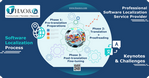
Each translation agency can have a different process depending on the criteria and nature of the service. The Customized Integration and Linguistic Review process at Thao & Co. consists of three main stages as follows:
Stage 1: Analyze the localization kit and review the source codes
Upon receiving your information and requirements, we will assign the most suitable Project Manager and Language Lead for your project. The website content in need of translation will be extracted and compiled into a “localization kit” and thoroughly analyzed before translation. At the same time, our programmers will review the source codes to check for multi-lingual capabilities and provide suitable solutions.
Phase 2: Translation, proofreading, and programming
Our skilled linguists will work on the localization kit. The Language Lead will attentively proofread each translation, paying special attention to terminologies for maximum accuracy.
Simultaneously, our programmers begin developing the multi-lingual code for your product if they’re not already built in. Our IT specialists are proficient in multiple programming languages such as Python, JavaScript, C++, PHP, and content management systems like WordPress, Drupal, and Joomla, enabling them to meet all software product requirements.
Stage 3: Post-translation adjustments and linguistic review
After the localization process is completed, the localized content will be reintegrated into your product. Finally, the Language Lead will evaluate the naturalness and suitability of the integrated translation, assisting you with Localization Testing.
This is perhaps a question that many businesses have when planning to localize their products. Depending on your goals and resources, you can choose suitable complementary services alongside translation services. If you desire the highest quality and flexibility to serve creative potentials in the future, Customized Integration and Linguistic Review are the appropriate choices for your product.
The important thing is to seek a reputable and professional translation agency that can thoroughly address any concern you may have. You can contact Thao & Co. to receive prompt and dedicated support!
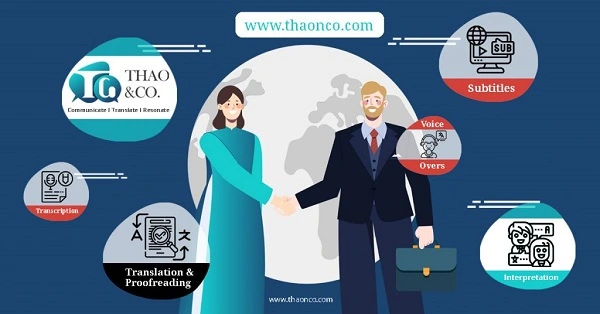
Thao & Co. is committed to providing you with professional translation and localization services performed by experienced native linguists. In addition to high-quality translation and proofreading services, we also offer a wide range of complementary services to meet your every need:
Visit our Get a Quote page to receive a detailed consultation today!